
Pet dental care is one of the most overlooked parts of keeping a dog or cat healthy. Dental disease ranks among the most common conditions veterinarians diagnose. Most pets develop meaningful oral disease well before their third birthday.
Because animals rarely show pain the way people do, that damage often goes unnoticed until it has already progressed. Below, you’ll find what the research shows and what happens during a professional exam. You’ll also learn how to support your pet’s mouth at home between visits. Small, consistent habits at home make a bigger difference than most pet owners expect.
Key Takeaways
- Periodontal disease affects most dogs and cats by age three, and its bacteria can reach the heart, liver, and kidneys.
- A professional dental cleaning under anesthesia includes scaling, tooth-by-tooth evaluation, digital X-rays, and surgical extractions or other treatments when needed.
- Daily brushing with VOHC-approved products slows tartar buildup between professional visits, but it cannot replace them.
- Annual oral exams, or semi-annual for at-risk patients, catch dental disease early, when less intervention is needed.
- Answers to common questions about exam frequency, anesthesia safety, early warning signs, and when to start appear below.
Why Periodontal Disease and Dental Disease Put More Than Teeth at Risk
Periodontal disease and dental disease affect far more pets than most owners realize. As Pet Talk, Texas A&M’s veterinary news service, notes, pet owners may overlook dental health. Periodontal disease affects an estimated 80% of dogs. It also affects about 70% of cats by age three.
Most of those animals show no obvious signs of discomfort. That’s part of why the problem spreads so widely before anyone notices.
Pets instinctively mask pain. A dog quietly dropping food may be in pain. A cat that stops grooming properly may have the same problem.
Neither behavior looks urgent to most owners. That’s why oral health problems tend to advance further in pets than in people, who can simply describe what hurts.
Does Dental Disease Really Affect My Pet’s Heart and Other Organs?
Yes. The American Veterinary Medical Association has linked untreated oral disease to heart, liver, and kidney disease in pets. As Purdue University’s Canine Welfare Science Center explains, bacteria from periodontal disease can travel into the bloodstream and affect organ health. The mechanism is fairly simple.
Plaque and tartar buildup below the gumline let bacteria thrive. Once gum inflammation breaks down that barrier, bacteria can enter the bloodstream. From there, they can travel to organs far from the mouth.
This is not a rare outcome. It’s a documented progression that happens when gum disease goes untreated for months or years. Dog oral health and cat oral health are medical concerns, not cosmetic ones. This applies at every life stage, from young puppies forming their first habits to senior pets managing existing health conditions.
Professional cleanings address what brushing simply cannot reach. Tartar that hardens below the gumline requires professional instruments to remove safely. That’s why veterinary organizations recommend annual professional dental care rather than treating it as optional.
Dental disease is largely preventable with early detection. Early detection means using the right equipment and anesthesia to look below the gumline. A standard physical exam cannot do that. A dedicated dental appointment can.
What Happens During a Professional Dental Cleaning and Comprehensive Dental Exam
A dental exam is not the same as a routine wellness check. Cornell University’s College of Veterinary Medicine trains veterinarians to perform conscious and anesthetized oral examinations, since each reveals different information about a pet’s mouth. It calls for a closer, more specialized look at every tooth and tissue in the mouth. The sections below walk through the anesthesia process, the exam itself, and why X-rays matter so much.
Preparing for Anesthesia
This level of oral health care requires anesthesia. It lets the veterinary team work without causing the patient pain or stress. An awake pet simply cannot hold still for the level of evaluation a thorough dental exam requires.
Before anesthesia, full blood panels and a pre-anesthetic physical are standard preparation. These steps confirm the patient is healthy enough for the procedure. They also flag anything that could affect how the pet responds to anesthesia. Modern monitoring equipment tracks heart rate, oxygen levels, and blood pressure throughout the procedure, giving the veterinary team real-time updates on how the patient is responding.
The Tooth-by-Tooth Evaluation
Once the patient is under anesthesia, the veterinary team evaluates each tooth and all oral tissues. This is where dental issues invisible during a physical exam finally become visible. Many practices use ultrasonic scaling, which removes plaque and tartar above and below the gumline using high-frequency vibration.
Why Dental Radiography Changes What a Dental Exam Can Find
Dental radiography separates a surface-level cleaning from a full diagnostic exam. Digital dental X-rays show tooth roots, bone levels, and pathology that exist entirely below the gumline. Many dental diseases show up only on radiographs, since visual inspection alone can miss them. This is especially important for older pets, who are more likely to have hidden issues below the gumline.
Digital dental X-rays guide every treatment decision, including whether the pet needs oral surgery or extractions. When possible, the team performs those procedures during the same visit to reduce the number of times a patient needs anesthesia.
Annual oral exams make it more likely that the team catches disease before it reaches that stage. Many practices use gums and teeth staging to document severity at each tooth site. This helps track changes from one year to the next.
How Often the AAHA Recommends Dental Exams for Dogs and Cats
Annual isn’t just a rule of thumb. It’s the standard set by the American Animal Hospital Association, based on when dental disease typically starts.
AAHA’s guidelines outline an illustrated 12-step protocol for oral health assessment, dental cleaning, and periodontal therapy for every adult dog and cat. They recommend these procedures at least annually, starting at 1 year for cats and small-breed dogs and at 2 years for large-breed dogs.
That timeline matters because periodontal disease often takes hold earlier than owners expect. Waiting until a pet “seems fine” usually means waiting past the point where prevention is still simple. Following the AAHA schedule, rather than an informal “every couple of years” habit, catches problems while they’re still minor.
Building Healthy Dental Habits: Home Dental Care Between Visits
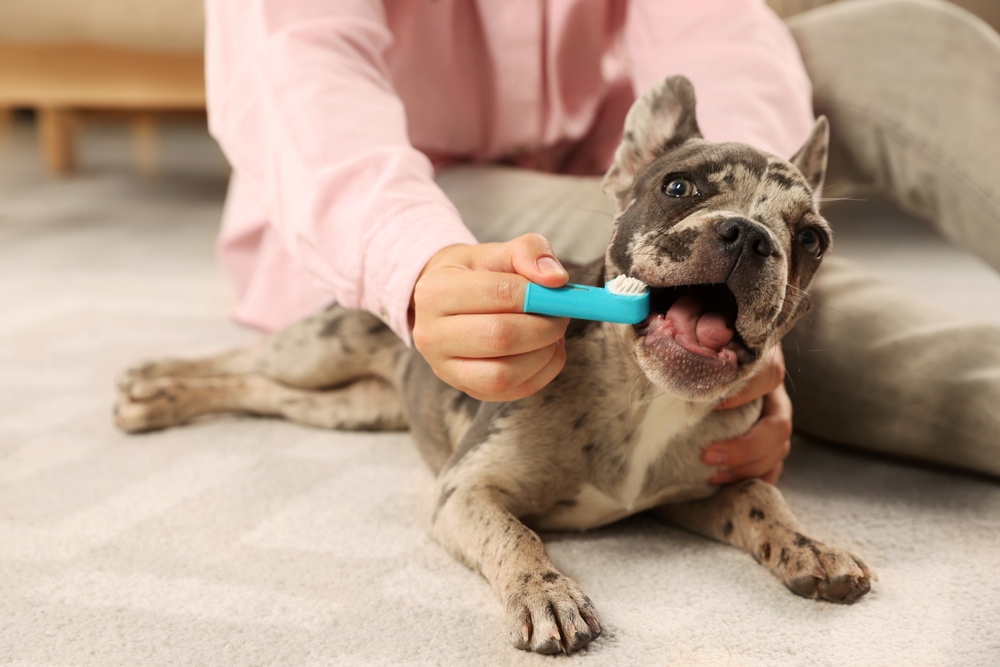
Home dental care does not replace professional cleanings. It slows how quickly plaque and tartar return between appointments. UC Davis School of Veterinary Medicine notes that once tartar forms, a professional cleaning is needed to remove it. Michigan State University’s College of Veterinary Medicine points to daily toothbrushing as a key at-home step. Products with the Veterinary Oral Health Council (VOHC) seal are another option.
Tools That Make Home Care Easier
Healthy dental habits start with the right tools. Pet-specific toothbrushes fit an animal’s mouth better and feel softer than human ones. Pet-safe enzymatic toothpastes chemically break down plaque, making them more effective than brushing with water alone. Many also come in flavors pets tolerate well.
Daily brushing works best, but brushing three to four times a week still provides real benefits. The goal is disrupting plaque before it hardens into tartar. Once tartar forms, brushing cannot remove it, and professional instruments become necessary.
Alternatives When Brushing Isn’t an Option
For pets that won’t tolerate a toothbrush, other options exist:
- Dental wipes clean tooth surfaces and the gumline without a brush.
- VOHC-sealed water additives reduce bacterial load when added to a drinking bowl.
- Independent testing confirms that VOHC-sealed dental chews, treats, and diets reduce plaque and tartar.
Consistency matters more than perfection here. Even a partial routine, done regularly, adds up to meaningful protection over time. Regular veterinary visits give your team a chance to review which products are working. They can adjust recommendations as your pet ages. The VOHC seal is what matters most. Without it, there’s no reliable way to know whether a product does more than mask bad breath. Ask your veterinary team which tools fit your pet’s age, breed, and current oral health.
Ready to Make Pet Dental Care a Yearly Habit?
Pet dental care works best when it happens every year, not just once. Periodontal disease develops quietly, and by the time bad breath or eating changes appear, it has often progressed for months. Veterinarians recommend regular oral exams and cleanings to catch disease early, before it turns into a bigger problem.
Annual oral exams catch problems a physical exam alone cannot find. Semi-annual visits close that gap further for higher-risk pets. If you’re ready to see where your pet’s mouth stands, Friendship Animal Hospital can walk you through what to expect next. Schedule a dental exam today!
FAQs
How often should my pet have a dental exam?
Most pets need a dental exam once a year. Higher-risk patients, including older animals, small breeds, and pets with prior dental disease, often need exams every six months. Your veterinary team can recommend the right schedule for your pet’s age and health history.
Is anesthesia safe for my pet during a dental cleaning?
Anesthesia is safe when you follow proper steps. Pre-anesthetic blood testing, a physical evaluation, and continuous monitoring keep risks low during the procedure. These steps let the veterinary team catch problems early and respond quickly. Talk with your veterinarian about your pet’s specific situation before the appointment.
What signs may my pet have dental disease?
Many pets with dental disease show no clear signs, which is why professional exams matter so much. Some show subtle changes like bad breath, reluctance to chew, dropping food, or pawing at the face. Mention any of these changes to your veterinary team.
Can I brush my pet's teeth at home, and does it really make a difference?
Yes, and it does make a difference. Daily brushing disrupts dental plaque before it hardens into tartar, which slows disease between professional cleanings. Use a pet-specific toothbrush and a pet-safe enzymatic toothpaste. Even brushing a few times per week provides more benefit than skipping it entirely.
When should I start thinking about my pet's dental health?
Start as early as possible. Most dogs and cats have dental disease by age three, so building brushing habits during puppyhood or kittenhood matters. Early professional exams also create a baseline that helps your veterinary team notice changes before they become serious problems.
Sources
- https://healthtopics.vetmed.ucdavis.edu/health-topics/canine/dental-home-care-instructions
- https://www.vet.cornell.edu/sites/default/files/Veterinary-Dentistry-Printable.pdf
- https://caninewelfare.centers.purdue.edu/wp-content/uploads/2025/08/Dental-Disease-in-Dogs.pdf
- https://vetmed.tamu.edu/news/pet-talk/dental-hygiene-in-dogs-and-cats/
- https://www.aaha.org/resources/2019-aaha-dental-care-guidelines-for-dogs-and-cats/

